Key Points
Water is part of nearly every household routine. It fills the kettle in the morning, runs through the shower, washes vegetables, cleans clothes, and keeps appliances working. Because it is so familiar, many homeowners assume that clear water is automatically good water. But appearance alone can’t tell the whole story. Water may contain excess minerals,…
Water is part of nearly every household routine. It fills the kettle in the morning, runs through the shower, washes vegetables, cleans clothes, and keeps appliances working. Because it is so familiar, many homeowners assume that clear water is automatically good water. But appearance alone can’t tell the whole story.
Water may contain excess minerals, sediment, unpleasant odors, or other substances that aren’t immediately visible. Some problems become obvious only after they leave stains on fixtures or affect the taste of drinking water. Others may require proper testing to identify. Before investing in a filtration system, it makes sense to understand what is actually coming through the tap.
A little investigation at the beginning can prevent unnecessary expense later.
Why Water Quality Can Differ Between Homes
Water quality depends on several factors, including the source, local geology, plumbing, treatment methods, and the age of the property. Homes connected to a municipal supply may receive treated water, but the water can still pick up a taste or odor from disinfectants, pipes, or storage systems.
Private wells have their own challenges. Groundwater can contain naturally occurring minerals such as calcium, magnesium, iron, and manganese. Depending on the location, well water may also be affected by bacteria, sediment, sulfur compounds, or other substances.
Even neighboring properties can experience different water conditions. One home may struggle with hard water, while another may notice sulfur odor or sediment. That’s why general recommendations don’t always work well. A system should be selected according to the actual water profile.
The Value of a Free Water Assessment
For homeowners who are unsure where to begin, a free residential water test can be a useful first step. Depending on the provider and the scope of the service, this type of assessment may identify common concerns such as hardness, chlorine, iron, pH, or other water characteristics.
A basic screening may not replace laboratory testing for every situation, but it can help homeowners understand whether further investigation is needed. It also gives them an opportunity to ask questions before committing to equipment.
When arranging a water test, homeowners should ask what the test includes and whether the results are measured on-site or sent to a laboratory. They should also find out whether the provider explains the findings clearly. A list of numbers without context can leave people more confused than informed.
If the property uses a private well, more detailed testing may be appropriate, especially when there has been flooding, a change in water appearance, or a concern about microbial contamination.
Common Water Problems a Test May Reveal
Water testing can help identify several common household concerns.
Hard Water
Hard water contains calcium and magnesium. It can create scale on faucets, showerheads, water heaters, and appliances. It may also make soap less effective and leave laundry feeling stiff or dull.
Iron and Manganese
Iron can produce orange or reddish stains, while manganese may cause dark staining. These minerals may also affect taste and create maintenance problems if present at elevated levels.
Chlorine Taste and Odor
Municipal water systems often use disinfectants to control microorganisms. While these treatments are important for public health, some homeowners notice chlorine taste or odor in drinking water or during showers.
Sediment
Sand, silt, and other particles may enter water through a private well or aging plumbing. Sediment can affect faucets, valves, filters, and appliances.
Microbial Concerns
Bacteria and other microorganisms require appropriate testing and treatment. A standard carbon filter or softener should not be assumed to address microbial contamination unless it is specifically designed and certified for that purpose.
Understanding Reverse Osmosis Systems
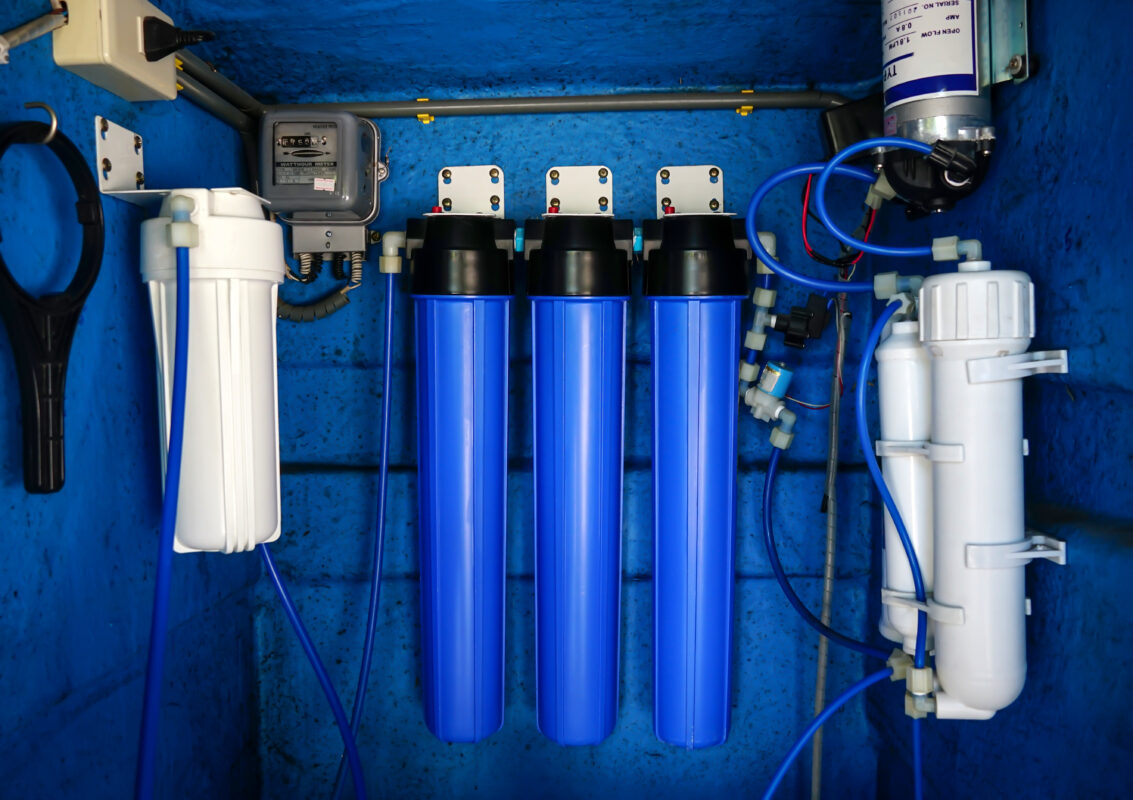
For homeowners focused on drinking and cooking water, reverse osmosis systems are a popular point-of-use option. These systems use pressure to move water through a semipermeable membrane, reducing many dissolved substances and producing treated water at a dedicated faucet.
Reverse osmosis can be helpful when the goal is to improve the taste of drinking water or reduce certain dissolved contaminants. Many systems also include pre-filters and a final carbon filter to support membrane performance and improve taste.
However, RO systems are not perfect for every household. They may produce wastewater during the filtration process, and their filters and membranes need regular replacement. They also remove some minerals that may otherwise remain in water, which is not necessarily a problem but is worth understanding.
Before purchasing an RO unit, homeowners should review the system’s performance claims, flow rate, storage capacity, filter costs, and certification. A system that meets a household’s daily needs is more useful than one chosen only because it has an impressive list of features.
When Whole-Home Treatment Makes More Sense
Point-of-use systems are useful for drinking water, but they do not treat water used in showers, washing machines, toilets, or other fixtures. If the problem affects the entire property, a broader approach may be more appropriate.
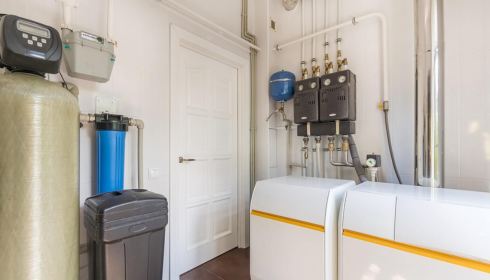
whole home water treatment systems are installed at the main water entry point, allowing treated water to flow throughout the house. Depending on the equipment, whole-home treatment may address sediment, chlorine taste and odor, hardness, iron, or other specific concerns.
A whole-house system can be especially useful when homeowners want to protect plumbing and appliances or improve water quality across multiple rooms. For example, a softener may reduce scale, while a carbon filter may help with chlorine odor. A sediment filter can provide an additional layer of protection for fixtures and equipment.
The correct setup depends on the water test. A whole-home filter designed for chlorine won’t necessarily remove hardness, and a softener won’t eliminate every contaminant. Combining technologies can be effective, but only when each component has a clear purpose.
Choosing the Right System Without Overspending
Water treatment equipment should be selected based on need, not fear or sales pressure. Homeowners should ask the following questions before making a purchase:
- What specific problem does the system address?
- Is the issue confirmed by testing?
- Is the system intended for one faucet or the entire house?
- What is the expected maintenance schedule?
- How much do replacement filters or parts cost?
- Does the equipment have relevant independent certification?
- Will the system affect water pressure or flow?
- Is professional installation recommended?
It is also important to consider household water usage. A small system may struggle in a large home with several bathrooms, while an oversized unit may be unnecessarily expensive.
Maintenance Keeps Water Treatment Effective
No filtration system is completely maintenance-free. Filters become less effective as they fill with contaminants. RO membranes need replacement, softeners may require salt or cleaning, and UV systems need lamp changes if disinfection is part of the setup.
Homeowners should keep track of installation dates, filter changes, and service visits. Waiting until water tastes unusual or pressure drops can allow a small maintenance issue to become a larger one.
Regular testing may also be worthwhile, particularly for private well owners or households experiencing changes in water quality.
Making a Confident, Informed Choice
The best water treatment decision usually begins with a simple question: What is wrong with the water, if anything, and what result do we actually want?
Testing helps answer the first part. Understanding treatment technologies helps answer the second. From there, homeowners can compare systems based on performance, cost, maintenance, and suitability for the property.
Whether the final choice is a drinking-water RO unit, a whole-home filter, a softener, or a combination of technologies, the goal should be practical improvement—not unnecessary complexity. Good water treatment is not about buying the biggest system or believing every promise on a product label. It’s about choosing a solution that fits the home and continues to work long after installation day.