Key Points
Good water is something most of us take for granted until there’s a reason not to. Maybe your morning tea tastes slightly different, white deposits keep appearing around the kitchen tap, or the water from your borewell leaves stains on bathroom fixtures. These little signs can be easy to ignore, especially when the water looks…
Good water is something most of us take for granted until there’s a reason not to. Maybe your morning tea tastes slightly different, white deposits keep appearing around the kitchen tap, or the water from your borewell leaves stains on bathroom fixtures. These little signs can be easy to ignore, especially when the water looks clear. But appearance alone doesn’t tell the whole story.
Every water source has its own characteristics, and the right treatment depends on what’s actually present. For some households, a simple sediment filter may be enough. Others might need more advanced equipment to address dissolved minerals or particular contaminants. The trick is understanding the problem before spending money on a solution.
With a little knowledge and the right professional advice, choosing a suitable water treatment system becomes much less confusing.
Start With a Clear Picture of Your Water Quality
Before comparing filters or treatment units, take time to understand your water supply. Homes connected to a municipal network can have different concerns from properties relying on borewells, private wells, or stored water. Even within the same locality, water quality may vary.
Hardness is a common issue. Calcium and magnesium can leave chalky marks on taps, reduce soap lather, and contribute to scale inside water heaters. Iron and manganese may cause staining, while sediment can make water appear cloudy. Other concerns, including certain chemicals and microorganisms, may not produce any visible change at all.
That’s why water testing is a useful first step. Depending on the source and local risks, testing may include pH, hardness, total dissolved solids, selected metals, nitrate, fluoride, and microbiological indicators. A qualified laboratory can help determine which tests are appropriate.
It’s also important not to treat one measurement as a complete safety assessment. A low total dissolved solids reading, for instance, doesn’t prove that water is free of harmful microorganisms or every possible contaminant. Different tests answer different questions.
Once you understand the results, you can choose equipment that addresses the actual concern rather than relying on broad marketing claims.
How Reverse Osmosis Fits Into Home Water Treatment
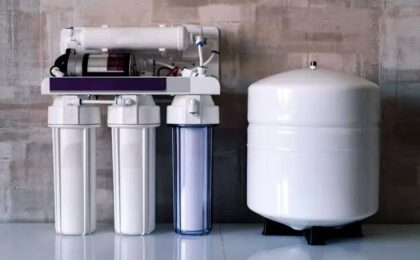
One technology that often comes up when people explore drinking water options is reverse osmosis. Although the name sounds technical, the basic idea is relatively straightforward. Water is pushed under pressure through a specialised semipermeable membrane that allows water molecules to pass while reducing many dissolved substances.
Depending on the system design and membrane performance, reverse osmosis can reduce certain dissolved salts, some metals, and other contaminants. This makes it useful in situations where testing identifies concerns that ordinary sediment or carbon filters cannot adequately address.
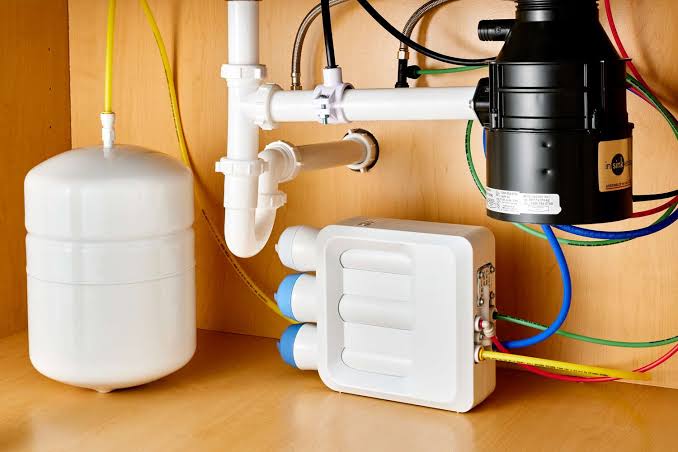
However, reverse osmosis isn’t automatically the best choice for every home. If your main problem is hard water throughout the house, an RO unit fitted beneath the kitchen sink won’t protect your showerheads or water heater from scale. A softener or another appropriate treatment method may be more suitable for that purpose.
RO systems also have practical considerations. Many household models produce some reject water, need periodic filter and membrane replacement, and require adequate operating pressure. Some remove minerals that contribute to water’s taste, so homeowners may prefer a system with a suitable remineralisation stage.
Before buying, check the manufacturer’s performance data and independent certifications for the specific contaminants you want to reduce. A system should be selected because it addresses a demonstrated need, not simply because it’s advertised as advanced.
Treating Well Water Requires a Different Approach
Properties using private wells or borewells often face a different set of challenges from homes receiving treated municipal supplies. Groundwater quality depends on local geology, nearby land use, agricultural activity, and the condition of the well itself.
Effective well water treatment begins with testing rather than assuming that groundwater is naturally clean. Depending on the location, testing may need to assess bacteria, nitrate, hardness, iron, manganese, and other locally relevant contaminants. The appropriate test panel should reflect the risks associated with the source.
For example, iron-rich water may leave reddish-brown marks in sinks and laundry. Depending on its form and concentration, iron may require oxidation and filtration rather than a standard drinking-water cartridge. Hardness may call for a softener, while microbiological contamination requires a treatment approach designed specifically for that hazard.
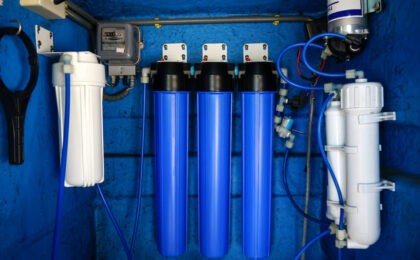
A single device rarely solves every possible well-water issue. Some properties need a combination of treatment stages, each serving a particular purpose. Sediment removal might come first, followed by specialised filtration or disinfection. The sequence depends on the test results and the technologies selected.
Well owners should also pay attention to the source itself. A damaged well cap, poor drainage, or nearby contamination can create problems that household treatment equipment shouldn’t be expected to solve alone. Regular testing and proper maintenance help identify changes before they become more serious.
If testing detects a potentially unsafe contaminant, follow the laboratory’s recommendations and obtain qualified advice about safe water use while the problem is addressed.
Why Installation Quality Makes a Difference
Even the right treatment equipment can disappoint when it’s installed incorrectly. Poorly fitted connections may leak, undersized systems can restrict flow, and incorrect settings can affect treatment performance. These aren’t always obvious on the first day, either.
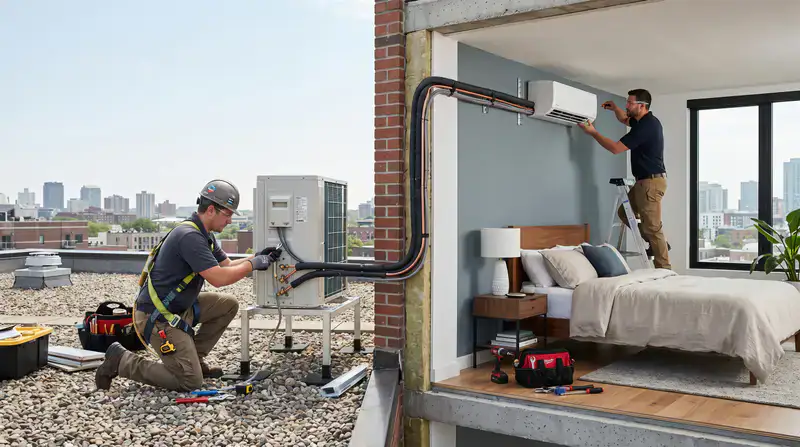
Choosing professional water system installation helps ensure that the equipment suits the property’s plumbing, water pressure, and daily demand. An experienced installer can assess available space, drainage requirements, connection points, and access for future servicing.
Household size matters here. A compact drinking-water system may work perfectly for a small family, while a larger property with several bathrooms may need a different arrangement for whole-house treatment. Commercial properties have their own demands, particularly when equipment must support continuous operations.
Before installation, ask what the system is designed to remove, what maintenance it requires, and which components will need replacement. The installer should also explain how to recognise common issues, such as unusual pressure changes or warning indicators.
It’s worth keeping the installation documents and service records in one place. When a filter needs replacing or a technician needs to investigate a fault, those details can save time and confusion.
Don’t Overlook Everyday Maintenance
Water treatment isn’t a purchase you make once and forget about. Filters gradually collect particles, membranes lose effectiveness over time, and other components may require cleaning or adjustment.
Follow the manufacturer’s maintenance schedule and consider how heavily the equipment is used. A busy household may need replacements sooner than a home with lower water consumption. Water with high sediment levels can also shorten the useful life of certain filters.
Pay attention to changes in taste, odor, flow, or the appearance of deposits. These signs don’t necessarily mean the treatment system has failed, but they deserve attention. If water changes suddenly, investigate the cause rather than automatically installing another filter.
Routine maintenance is usually less troublesome than dealing with a neglected system after performance has deteriorated.
Making a Sensible Choice for Your Home
Choosing water treatment equipment doesn’t have to involve buying the most expensive system or installing several technologies at once. Begin with a reliable assessment of your water, identify the issues that matter, and compare solutions that are designed to address them.
For one household, that might mean a softener for persistent hardness. Another may benefit from reverse osmosis at the kitchen tap, while a property using groundwater may need a more tailored treatment plan.
The important thing is to understand what your water needs and how each piece of equipment will help. With suitable testing, careful installation, and regular maintenance, water treatment becomes a practical investment rather than a guessing game.
After all, the goal isn’t complicated technology for its own sake. It’s dependable water, fewer household frustrations, and confidence that the system you’ve chosen is doing the job it was meant to do.